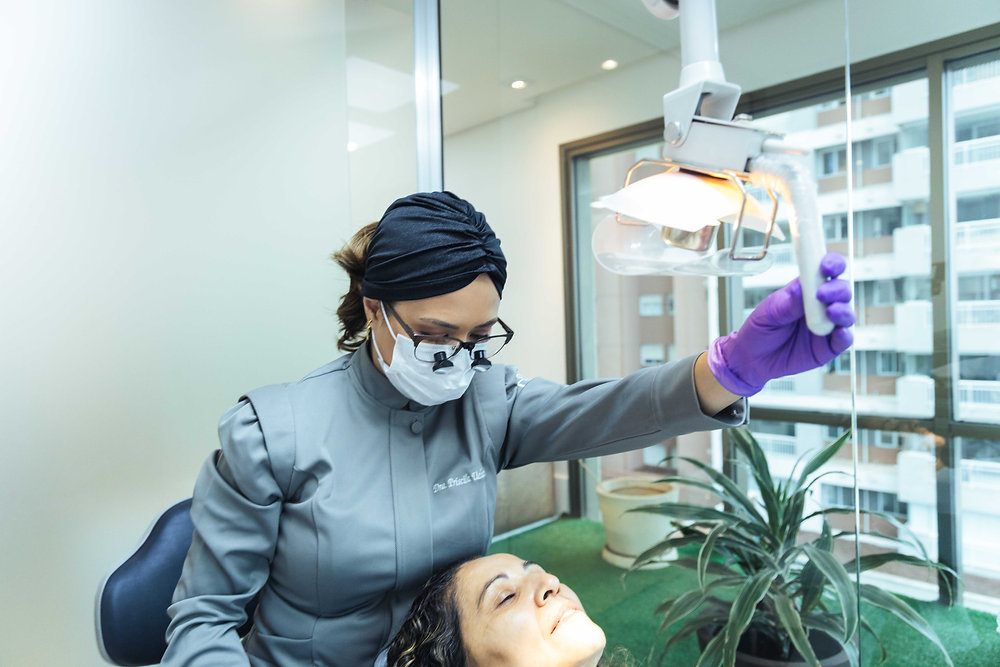
Why Companies Are Sending Their Crews to Rio for Dental Care
When a maritime company's HR director first heard about corporate dental tourism, she was skeptical. Sending crew members to Brazil for dental work sounded complicated — logistically, legally, and medically. Six months later, after 38 crew members had been treated at Hub Dental in Rio de Janeiro, her opinion had changed completely.
"The savings were real, the quality was excellent, and the team handled everything," she told us. "We're now budgeting for dental care in Rio as a standard part of our crew welfare program."
Her experience is increasingly common. A growing number of shipping companies, offshore operators, and international airlines are discovering that Rio de Janeiro offers a compelling combination: world-class dental care at a fraction of the cost they'd pay in the US or Europe, with the added benefit of a city that crew members actually want to visit during their time off.
The Problem: Crew Members and Dental Care Don't Mix Well
Dental health is a persistent challenge for companies with mobile, internationally deployed workforces. The reasons are structural:
- Irregular schedules make it difficult to maintain consistent relationships with dentists at home.
- Occupational health requirements — especially in offshore and aviation sectors — demand regular dental fitness certifications that are hard to obtain while deployed.
- Emergency dental issues at sea or on a rig are costly, disruptive, and sometimes medically serious. A crew member with an untreated abscess can be incapacitated within days.
- Deferred treatment is the norm. Workers put off non-emergency dental work until it becomes an emergency, dramatically increasing costs and recovery time.
The result is a workforce that is chronically under-treated dentally, with predictable consequences: higher emergency costs, more sick days, and — in regulated industries — compliance risks around medical fitness certificates.
Why Rio de Janeiro?
Brazil has long been recognized as one of the world's leading countries for dental education and practice. The country produces more dentists per capita than almost any other nation, and Brazilian dental schools — particularly in Rio de Janeiro and São Paulo — are internationally respected. The result is a deep pool of highly trained specialists who practice at costs that reflect Brazil's economic reality, not US or European pricing.
For maritime companies, Rio has an additional structural advantage: it's a major port city. Vessels calling at the Port of Rio de Janeiro or the nearby Port of Itaguaí can schedule crew dental appointments to coincide with port stays, turning downtime into productive health maintenance. For offshore operators in the Campos and Santos basins — among the most productive oil fields in the Western Hemisphere — Rio is the natural onshore hub.
Airlines have discovered a similar logic. Rio's Galeão International Airport handles significant international traffic, and layovers of 12–24 hours are common on long-haul routes. A crew member with a dental issue can receive treatment during a layover and be back on duty for the return flight.
The Numbers: What Companies Actually Save
The cost differential between Brazil and the US or Europe is substantial — and it compounds when you're managing dental care for dozens or hundreds of employees.
| Treatment | United States | Europe (avg.) | Rio de Janeiro | Savings vs. US |
|---|---|---|---|---|
| Emergency extraction + crown | $3,500 | $2,400 | $1,100 | $2,400 (69%) |
| Annual check-up + cleaning + X-rays | $350 | $250 | $90 | $260 (74%) |
| Single dental implant | $4,500 | $3,200 | $1,800 | $2,700 (60%) |
| Root canal (molar) | $1,800 | $1,200 | $550 | $1,250 (69%) |
| Occupational dental certificate | $200 | $150 | $60 | $140 (70%) |
For a company with 100 crew members receiving annual check-ups, the savings on preventive care alone exceed $26,000 per year. Add in the avoided costs of emergency treatments that preventive care prevents, and the business case becomes compelling.
How Corporate Dental Tourism Works in Practice
The mechanics of corporate dental tourism are simpler than they might appear. A well-structured program typically works as follows:
1. Contract and Onboarding
The company signs a corporate agreement with Hub Dental that specifies the services covered, pricing, billing arrangements, and SLA commitments (such as guaranteed appointment availability within 48 hours for crew members in port). Each crew member is registered in the system with their employment details and any relevant medical history.
2. Scheduling Around Port Calls and Layovers
When a vessel is scheduled to call at Rio, the company's HR or operations team notifies Hub Dental in advance. We pre-schedule appointments for crew members who need treatment or routine check-ups, ensuring that clinical time is used efficiently and crew members don't have to navigate the city independently.
3. Treatment and Documentation
All treatments are documented in English (or Spanish, on request). Clinical records are maintained digitally and can be shared with the company's occupational health provider or the crew member's home dentist. Occupational health certificates are issued in formats accepted by major maritime and aviation authorities.
4. Consolidated Billing
Rather than processing individual claims, Hub Dental issues a single monthly invoice to the company covering all treatments provided during the period. This dramatically simplifies administration and eliminates the need for crew members to manage reimbursement claims.
The Emergency Dimension
For companies with vessels or rigs operating in Brazilian waters, Hub Dental's 24/7 emergency availability is particularly valuable. A crew member who develops a dental emergency while in port — or who is evacuated from an offshore installation — can access care immediately, at any hour, through our dedicated WhatsApp emergency line.
This matters operationally. A dental emergency that goes untreated can escalate into a systemic infection requiring hospitalization. Getting a crew member treated quickly and returning them to duty is almost always cheaper than the alternative — and it's better for the crew member.
What to Look for in a Corporate Dental Partner
Not every dental clinic in Rio is equipped to serve corporate clients. When evaluating a dental partner for your crew welfare program, look for:
- Multilingual capability — your crew may speak English, Spanish, Filipino, or a dozen other languages. The clinical team needs to communicate clearly.
- Experience with international patients — the administrative and clinical workflows for international patients are different from domestic ones. A clinic that has treated hundreds of international patients will handle the paperwork, documentation, and follow-up more smoothly.
- Flexible scheduling — port calls and layovers don't always happen on weekdays during business hours. A corporate partner needs to offer genuine flexibility.
- Transparent pricing — corporate contracts should specify fixed prices for common procedures, eliminating the risk of unexpected costs.
- Quality materials — confirm that the clinic uses internationally recognized implant systems and prosthetic materials (Nobel Biocare, Straumann, IPS e.max, etc.). The quality of materials matters for long-term outcomes, especially for crew members who won't be returning for follow-up care easily.
A Note on Compliance and Occupational Health
Companies in regulated industries — particularly maritime and aviation — need to ensure that dental care received abroad meets their occupational health requirements. Hub Dental's clinical team is familiar with the dental fitness standards of major maritime classification societies and aviation medical authorities. We issue documentation in the formats required for compliance, and we can coordinate with your occupational health provider to ensure that records are properly integrated into your crew management system.
Getting Started
The first step is a discovery conversation. We'll ask about your company's structure, the size and composition of your crew, the ports or airports where your people are regularly present, and your current approach to dental benefits. From there, we can propose a contract structure that fits your operational reality.
Most corporate clients are operational within two to three weeks of signing a contract. The onboarding process is straightforward, and we handle the administrative setup on our end so that your HR team doesn't have to.
If you're managing a workforce that spends significant time in or near Rio de Janeiro, the question isn't whether corporate dental tourism makes sense — it's why you haven't started yet.